
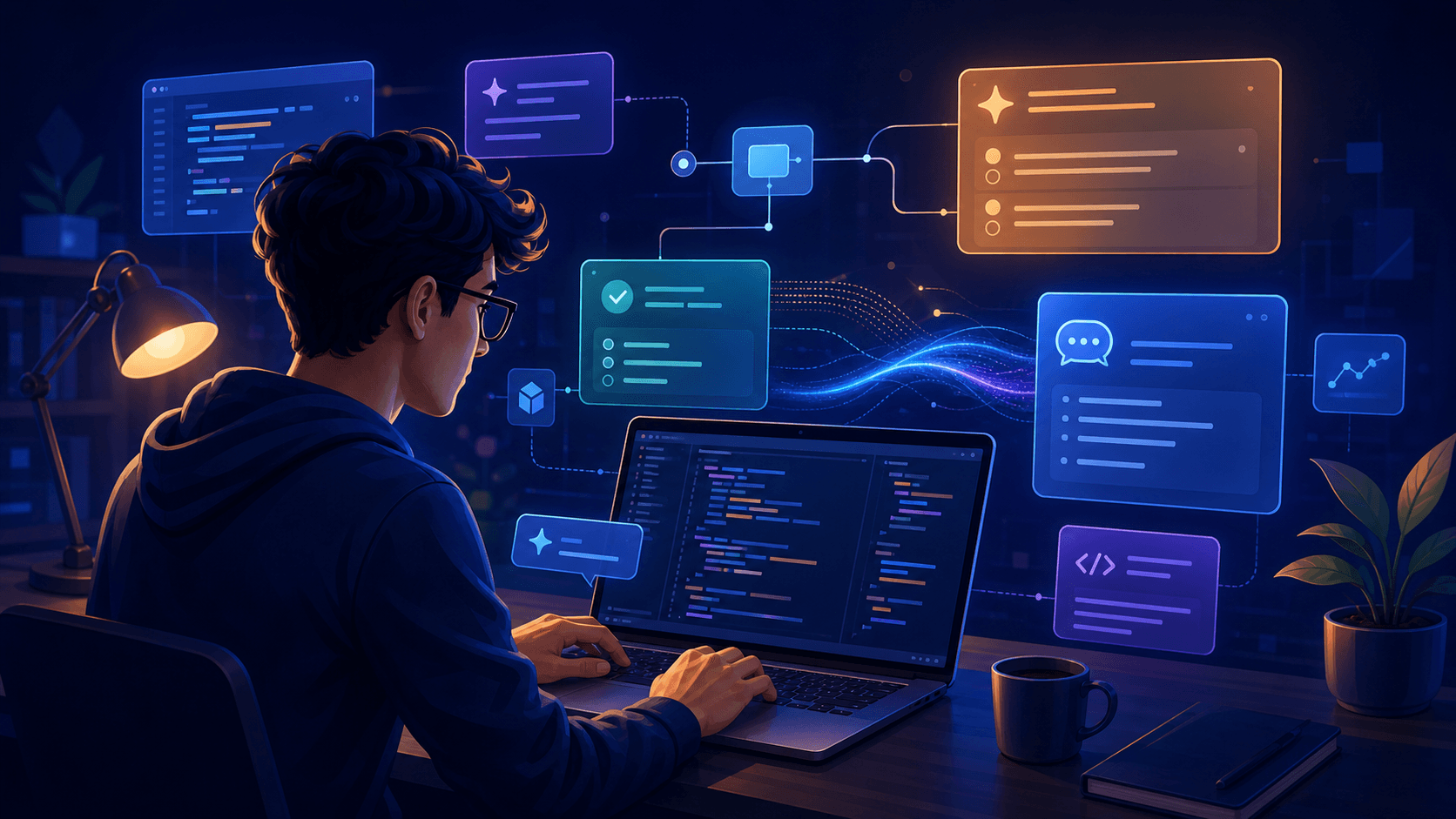
AI Agents in 2026: The Future of Software Development
AI is moving from "answer my question" to "help me finish the task."
That shift is why AI agents feel so important in 2026. A chatbot can explain a bug. An AI agent can inspect the codebase, propose a plan, edit files, run tests, summarize failures, and keep working until the task is closer to done. It is not perfect, and it still needs human review, but the workflow already feels very different from classic autocomplete.
As a full-stack developer intern, I see this less as "AI replacing developers" and more as a new layer in the development process. The developer still owns the product thinking, architecture, security, and final judgment. The agent becomes a teammate for the repetitive, searchable, and testable parts of building software.
What are AI agents?
An AI agent is an AI system that can work toward a goal, not just answer a single prompt.
In simple terms, an agent can:
- understand what you want to achieve
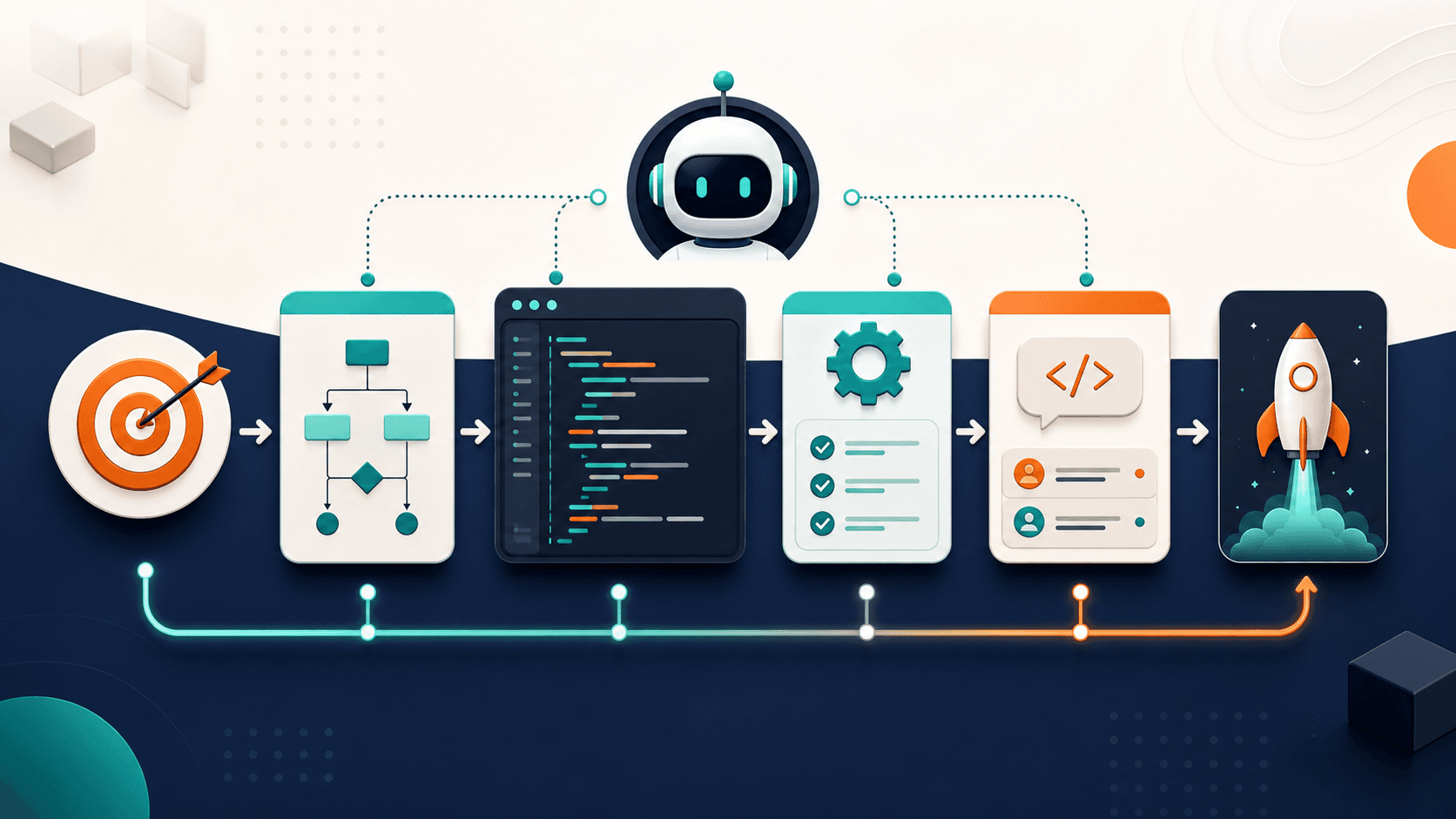
- break the work into steps
- use tools like a code editor, terminal, browser, database, or API
- check the result
- adjust the plan when something fails
For developers, that means the agent is not only generating snippets. It can move through a workflow: read the existing code, find the right files, make a small change, run a test, explain the tradeoffs, and ask for help when it hits a real decision.
The key idea is agency. The AI is still guided by a human, but it has enough context and tool access to do more than one isolated action.
Why AI agents are trending in 2026
AI agents are trending because software teams want AI to help with real delivery, not only brainstorming.
Gartner's Top 10 Strategic Technology Trends for 2026 includes AI-Native Development Platforms and Multiagent Systems among the major strategic trends. Gartner describes AI-native development platforms as a way for teams to build software with generative AI more quickly, and multiagent systems as modular AI agents collaborating on complex tasks.
That matches what developers are seeing in practice. The market is moving from:
- chatbots that answer questions
- to coding assistants that suggest code
- to agents that can plan, edit, test, review, and document work across a project
For companies, the attraction is clear: faster prototypes, less repetitive engineering work, better documentation, and more automation around delivery. For developers, the opportunity is to learn how to use these tools without giving up engineering discipline.
How developers use AI agents
The most useful AI agent workflows are practical and boring in the best way.
Generating code
Agents can scaffold components, write API handlers, create database queries, and connect UI states. The better use case is not "write my whole app." It is "here is the existing pattern, add one feature in the same style."
That difference matters. A good agent should follow the project, not invent a new architecture every time.
Debugging issues
Instead of pasting an error into a chatbot, an agent can inspect the stack trace, search the repo, find the failing path, and suggest a fix. If it can run the test again, it can also verify whether the fix actually worked.
This is where agents feel powerful. Debugging is often not one question. It is a loop: observe, guess, change, test, repeat.
Writing tests
AI agents are useful for writing tests because tests have structure. An agent can read the behavior, create coverage for success and failure cases, and run the suite.
But I would still review the tests carefully. A test that only confirms the implementation's current behavior is not enough. The test should protect the user-facing requirement.
Reviewing pull requests
Agents can summarize a PR, detect risky files, point out missing tests, and check for common issues. They are especially helpful when the reviewer is tired or when the code touches many small files.
The human reviewer should still make the final call, especially for architecture, security, user experience, and business logic.
Creating documentation
Documentation is one of the easiest wins. Agents can turn code changes into README updates, changelog notes, API examples, and onboarding explanations. This helps teams keep docs closer to the real system.
Benefits for full-stack developers
For full-stack developers, AI agents can help across the full product path.
On the frontend, they can build components, connect forms, improve accessibility, and generate responsive states. On the backend, they can create routes, validation logic, database queries, and integration tests. In DevOps-style work, they can read logs, inspect build errors, and suggest deployment fixes.
The biggest benefits are:
- Faster prototyping: I can test an idea quickly before polishing it.
- Less repetitive work: Agents can handle boilerplate, migrations, simple refactors, and documentation drafts.
- Better learning speed: When I am stuck, an agent can explain the codebase and show where to look.
- More time for product thinking: If the agent handles routine steps, I can spend more energy on user experience, architecture, and correctness.
This is especially useful as an intern because real-world projects have a lot of context. The hard part is not always writing syntax. Sometimes it is understanding how the app is already designed.
Risks and limitations
AI agents can be useful, but they are not magic. They can produce confident wrong answers, insecure code, and changes that look correct but break hidden assumptions.
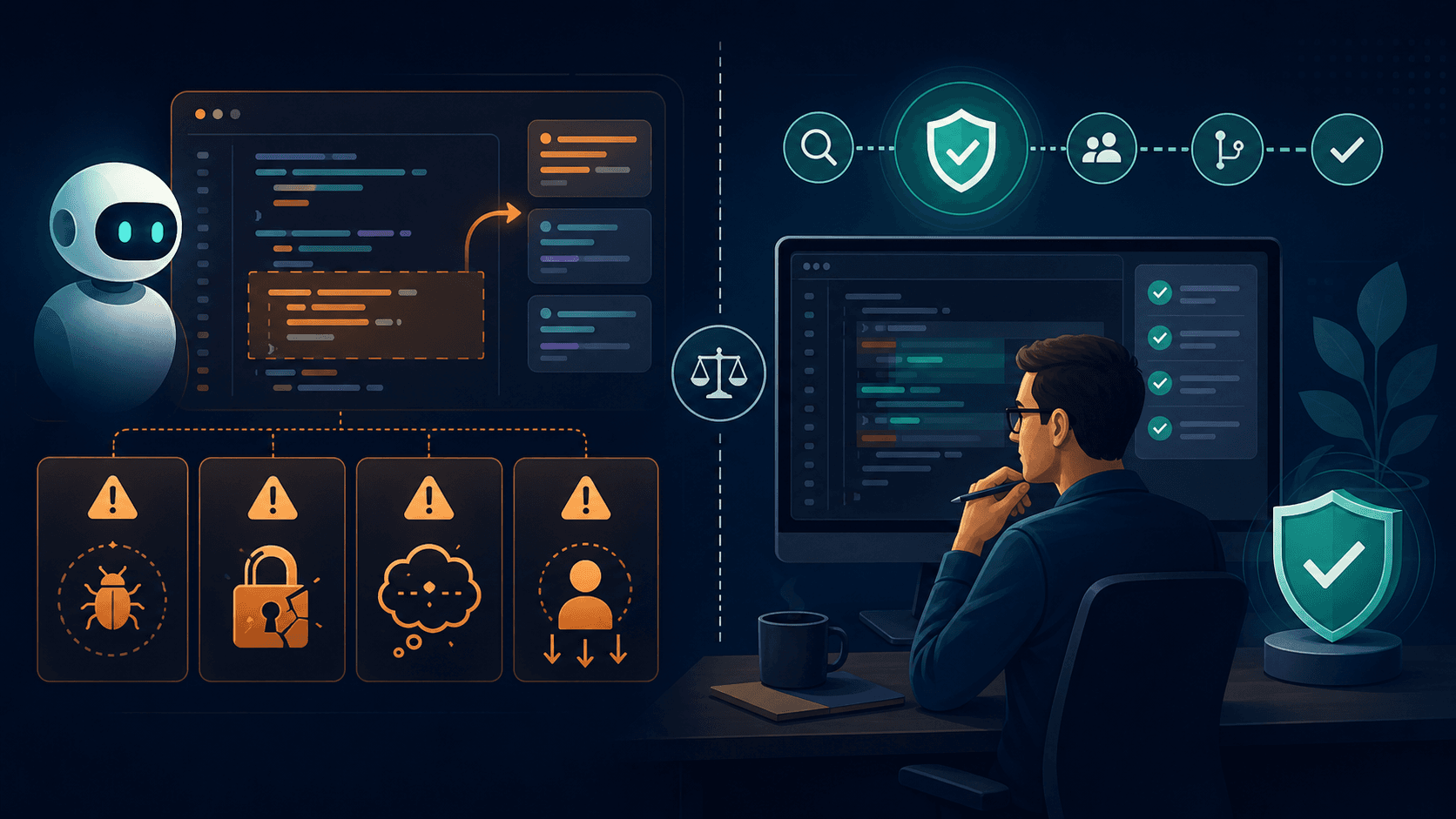
The main risks I watch for are:
- Wrong code: The agent may misunderstand the requirement or miss an edge case.
- Security problems: It can introduce weak validation, unsafe dependencies, or risky data handling.
- Over-dependence: If developers stop understanding the code, velocity becomes fragile.
- Messy architecture: Agents may solve the local task while ignoring long-term maintainability.
- False confidence: A passing small test does not always mean the system is correct.
The solution is not to avoid agents. The solution is to use them with engineering habits: small changes, clear requirements, tests, code review, and strong ownership.
The future of developers
I do not think good developers disappear because of AI agents. I think the developer role shifts.
More of the work will become:
- defining the right problem
- designing reliable systems
- choosing tradeoffs
- reviewing AI-generated output
- writing better specs
- managing workflows across tools
- understanding security, performance, and user experience
In other words, developers become more like builders and editors of intelligent workflows. Coding is still important, but the value moves higher: knowing what should be built, why it matters, how it should behave, and whether the result is trustworthy.
For full-stack developers, this is a big advantage. We already move between frontend, backend, APIs, databases, and deployment. AI agents fit naturally into that kind of broad workflow.
My practical take
If you are a student, intern, or junior developer, do not treat AI agents as a shortcut around learning. Treat them as a way to learn faster.
Use agents to:
- explain unfamiliar code
- generate first drafts
- compare implementation options
- write tests you can improve
- summarize errors
- document what you built
But also practice reading the output line by line. Ask why the code works. Run it. Break it. Fix it. That is where the real learning happens.
Conclusion
AI agents in 2026 are changing software development because they can participate in the full workflow, not only generate code snippets.
They can help developers build faster, test more often, document better, and prototype ideas with less friction. But they also make human judgment more important. The best developers will not be the ones who blindly accept AI output. They will be the ones who know how to guide agents, review their work, and turn AI-assisted output into reliable software.
My view is simple: AI agents will not fully replace good developers soon. But developers who learn how to work with them will have a serious advantage.