
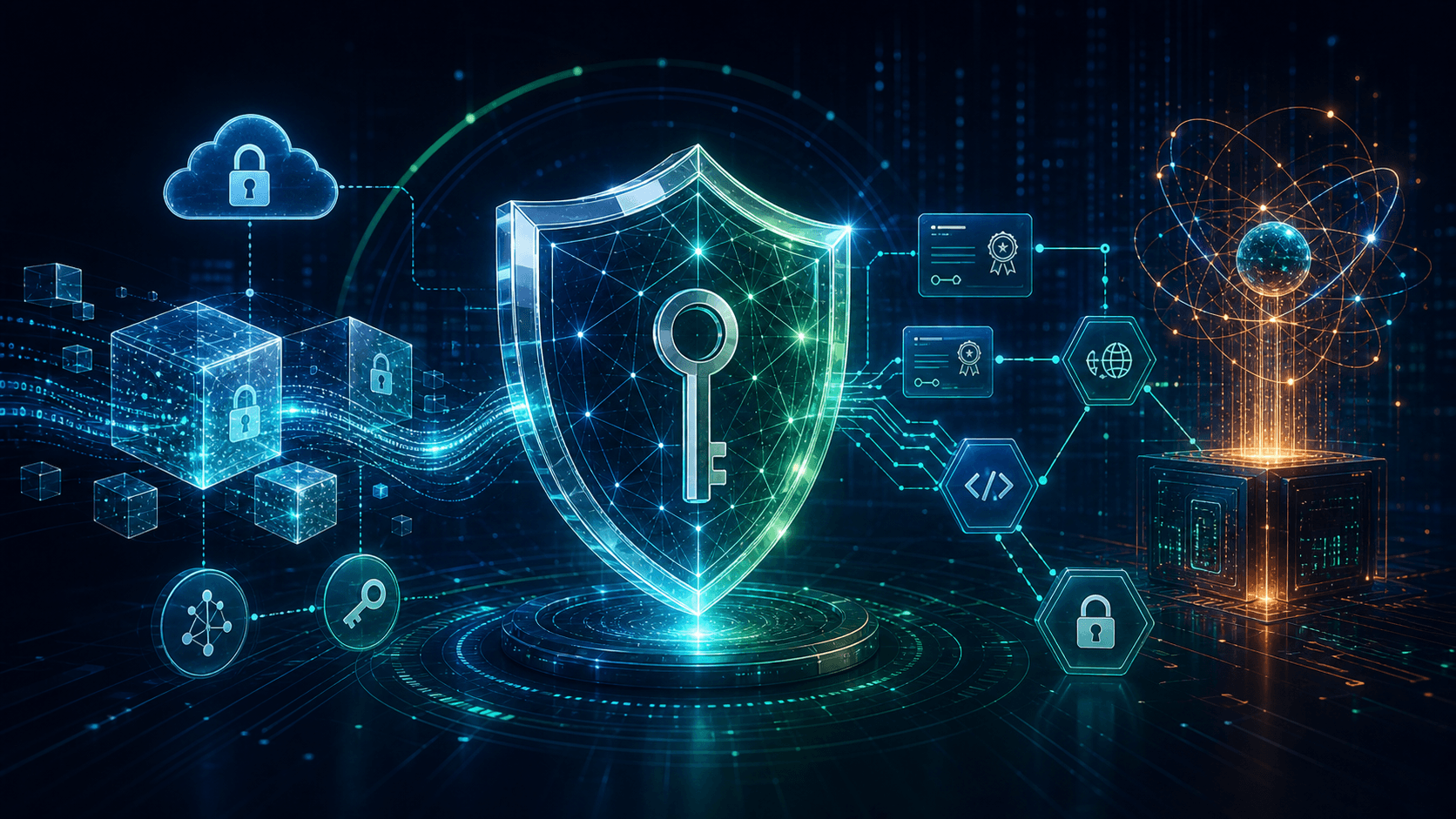
Post-Quantum Cryptography: The Next Big Cybersecurity Shift Developers Must Know
We hear about AI almost every day, but another quieter technology shift is moving in the background: quantum-safe security.
As developers, we build apps that depend on encryption all the time. Login systems, APIs, cloud dashboards, payment flows, banking apps, messaging, databases, and deployment pipelines all rely on cryptography to protect data. Most users never see that layer, but the whole internet depends on it.
Post-quantum cryptography matters because future quantum computers could break some of the public-key encryption systems that protect today's digital world. This does not mean everything is broken right now. It means developers should understand the shift early, because security migrations can take years.
As a full-stack developer intern, I see this as a future-proof skill. We do not need to become quantum physicists, but we should understand what is changing, why it matters, and what kinds of systems may need to be upgraded.
What is quantum computing?
Quantum computing is a different way of computing that uses quantum mechanics instead of only classical bits.
A normal computer works with bits: 0 or 1. A quantum computer uses quantum bits, or qubits, which can represent more complex states. That makes quantum computers potentially powerful for certain problems, especially simulation, optimization, and some cryptography-related math.
The important developer takeaway is simple: quantum computers are not just "faster laptops." They are better suited for specific classes of problems. One of the famous risks is that large enough quantum computers could make some current encryption methods unsafe.
That is why major companies and governments are investing in this area. Reuters reported in May 2026 that IBM plans a major quantum investment aimed at building a large-scale fault-tolerant quantum computer by 2029. Whether exact timelines change or not, the direction is clear: quantum computing is moving from research hype toward long-term infrastructure planning.
Why current encryption may be at risk
Modern web security uses different kinds of cryptography.
Some of it is symmetric encryption, where the same secret key is used to encrypt and decrypt data. Some of it is public-key cryptography, where one key can be public and another key stays private.
The biggest quantum concern is public-key cryptography. Systems like RSA and elliptic curve cryptography protect many things we use every day:
- HTTPS/TLS connections
- digital signatures
- software updates
- secure messaging
- identity systems
- cloud infrastructure
- API authentication flows
The risk is that a powerful enough quantum computer running the right algorithms could solve the math problems that make some of these systems secure today.
For a developer, this is not a reason to panic. It is a reason to pay attention. Security has always evolved. We moved from weak passwords to MFA, from HTTP to HTTPS, from older TLS versions to stronger ones. Post-quantum cryptography is another migration, but potentially much bigger.
What is Q-Day?
Q-Day is the name people use for the moment when a quantum computer becomes powerful enough to break widely used public-key encryption.
Nobody knows the exact date. It might be many years away, and some predictions may be too aggressive. But security planning does not wait until the last second, because real systems have long lifetimes.
There is also a serious problem called harvest now, decrypt later. Attackers can collect encrypted data today and store it. If quantum computers become powerful enough later, they may try to decrypt old data in the future.
That matters for data that must stay private for a long time:
- banking records
- government records
- health data
- legal documents
- passwords and account recovery secrets
- enterprise contracts
- private communication
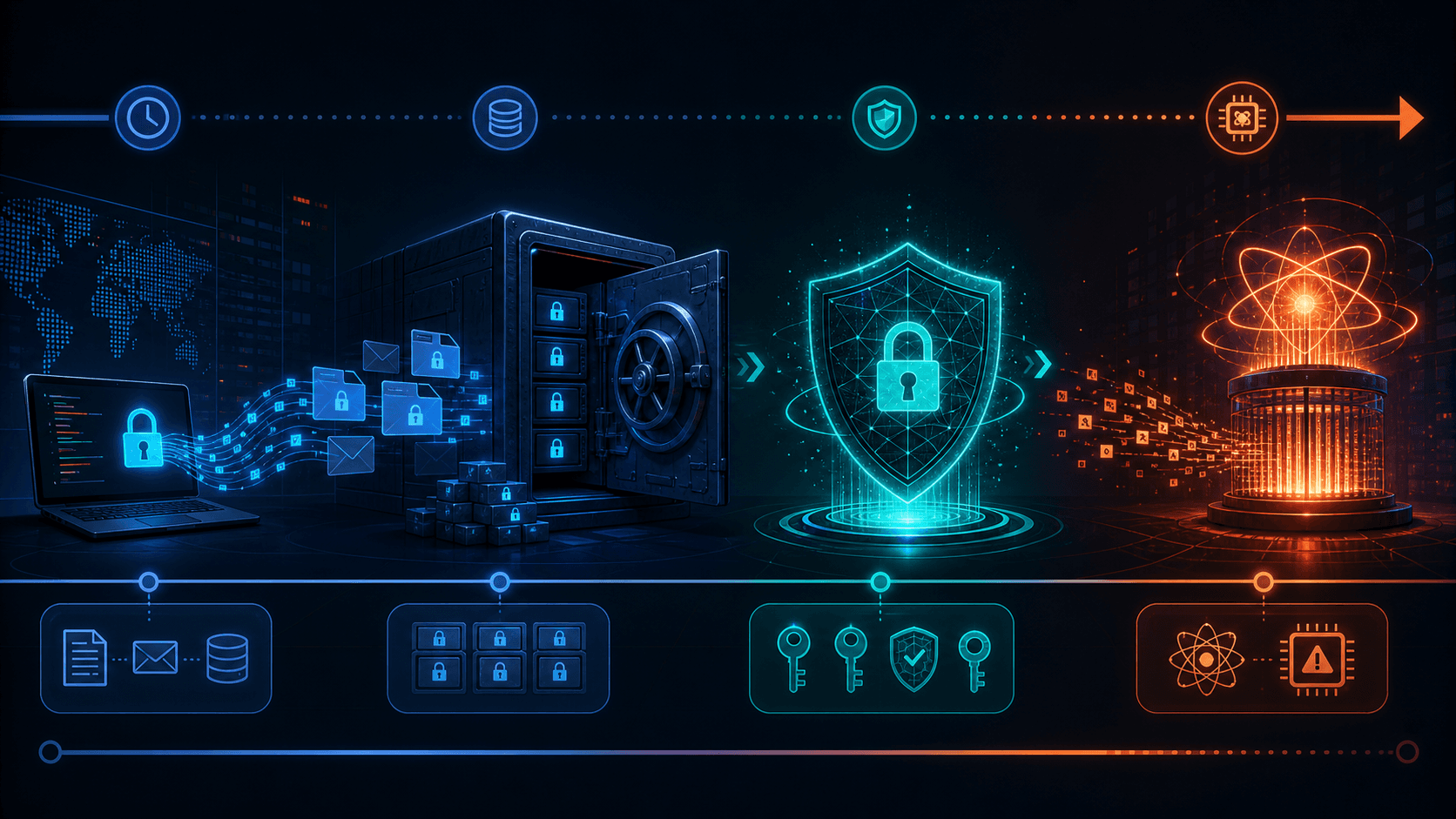
For short-lived data, the risk may be smaller. For sensitive long-term data, the risk becomes more important.
What is post-quantum cryptography?
Post-quantum cryptography, or PQC, means cryptographic algorithms designed to resist attacks from both classical computers and future quantum computers.
The goal is not to run encryption on a quantum computer. The goal is to create encryption that normal computers can use today, but that remains secure even if attackers later get powerful quantum computers.
The most important thing beginners should know is that PQC is already becoming standardized. The NIST Post-Quantum Cryptography project has been working on selecting and standardizing quantum-resistant public-key algorithms. That makes PQC more than a research topic. It is becoming part of real-world security planning.
In practical terms, post-quantum cryptography affects areas like:
- key exchange
- digital signatures
- certificates
- secure communication
- software signing
- identity infrastructure
Developers may not implement these algorithms manually, and we usually should not write cryptography ourselves. But we will use libraries, platforms, cloud services, browsers, APIs, and identity providers that adopt these standards.
Why web developers and full-stack engineers should care
At first, post-quantum cryptography sounds like a problem only for cryptographers. But full-stack developers sit close to the systems that use encryption every day.
If you build web apps, you already work around:
- user login
- sessions and tokens
- HTTPS
- API keys
- OAuth flows
- password reset links
- database connections
- cloud storage
- payment providers
- webhooks
- deployment secrets
You may not write the encryption algorithm, but you are responsible for using security tools correctly. That responsibility will not disappear in a quantum-safe future.
For example, when platforms start offering post-quantum TLS, updated certificates, new signature schemes, or hybrid cryptography modes, developers will need to understand what changed and how to test it.
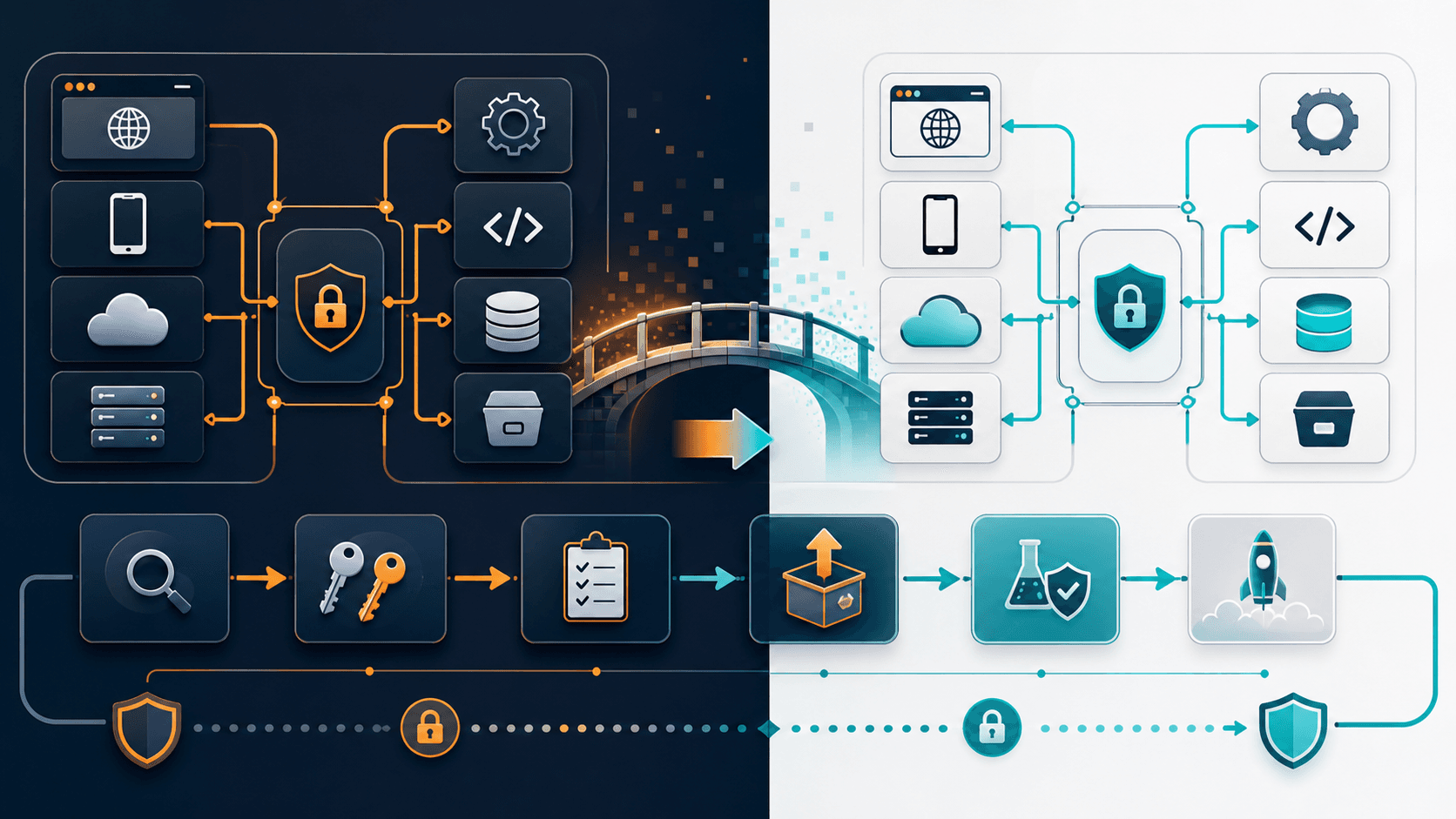
This is why I think PQC is worth learning early. It connects backend engineering, cloud infrastructure, application security, compliance, and long-term architecture.
How apps, APIs, banking, cloud, and login systems may change
Post-quantum migration will not happen in one big switch. It will likely arrive layer by layer.
Apps and websites
Web apps may start depending on browsers, CDNs, and hosting providers that support quantum-safe TLS. Developers may need to confirm compatibility, performance, and certificate behavior.
APIs
APIs may need updated transport security and stronger signing for sensitive requests. Teams may need to check SDKs, gateways, internal services, and third-party integrations.
Banking and finance
Banking systems care about long-term trust. Digital signatures, transaction verification, customer identity, and audit logs may need quantum-safe upgrades because financial data can stay sensitive for years.
Cloud infrastructure
Cloud providers will play a huge role. Key management systems, secrets managers, VPNs, service mesh connections, and workload identity may all evolve to support post-quantum options.
Login and identity
Authentication systems may shift through updated certificates, signing algorithms, token infrastructure, and identity provider support. Developers using OAuth, passkeys, SSO, and session systems should watch how their providers handle the migration.
What beginners can learn now
If you are a student, intern, or beginner developer, you do not need to start by reading advanced cryptography papers.
Start with the practical foundations:
- Learn how HTTPS and TLS work at a high level.
- Understand the difference between hashing, encryption, and signing.
- Learn why developers should not create custom crypto.
- Practice secure handling of API keys, tokens, and secrets.
- Study authentication basics like OAuth, sessions, JWTs, MFA, and passkeys.
- Follow NIST and cloud provider updates about post-quantum support.
- Learn the idea of crypto inventory: knowing where your app uses cryptography.
That last point is very important. Many teams cannot migrate what they cannot find. A future-ready developer should know where certificates, keys, tokens, signing systems, and encrypted storage exist in an application.
My practical take
Post-quantum cryptography is not something every beginner must master deeply right now. But every developer should understand the direction.
The mindset is:
- Do not write your own cryptography.
- Use trusted libraries and managed platforms.
- Keep dependencies and infrastructure updated.
- Understand where your app depends on encryption.
- Design systems that can be upgraded.
- Treat long-term sensitive data with extra care.
From an intern perspective, this is also a good career signal. Most developers focus only on frontend frameworks or AI tools. Those are useful, but security knowledge makes you more reliable in real projects.
Conclusion
Post-quantum cryptography is the next big cybersecurity shift developers should know about before it becomes urgent.
Q-Day may not happen tomorrow, but the preparation starts much earlier. Apps, APIs, banks, cloud systems, and login flows all depend on cryptography, and the industry is already moving toward quantum-safe standards.
For full-stack developers, the goal is not to become a quantum expert. The goal is to build secure systems, understand the migration, and stay ready as platforms adopt post-quantum cryptography.
AI may be the loudest trend right now, but quantum-safe security could become one of the most important developer skills of the next decade.